Marta Aragón

Marbella & Costa del Sol for retirees & early retirees

The retirement that actually starts when you arrive — not five years later.

I'm Marta. I help international retirees — classic retirees in their sixties and financially independent early retirees in their forties and fifties — settle into a life on this coast that feels less like an ending and more like the part you were waiting for.

International family on the beach in Marbella, Costa del Sol
The clients who get it right are the ones who treat the move as the beginning of something — not the closing chapter of somewhere else.
— Marta

Why here

Retiring here only works if you build a life, not a postcard. Most people do.

The Costa del Sol has been a retirement destination for British, German, Scandinavian and Dutch families since the 1970s. What that means in practice is that the infrastructure for international retirees is genuinely mature: doctors with decades of expat experience, lawyers who speak your language, supermarkets stocked for tastes from across northern Europe, communities that have been here long enough to have their own gravitational pull.

More recently I've been working with a different cohort too — financially independent early retirees in their forties and fifties, living off savings, dividends or investments rather than a state pension. The fiscal calculus is similar; the lifestyle questions are slightly different. Both audiences are welcome here, and both are addressed in what follows.

What both cohorts share is that the people who chose this coast have stayed. The retirees I work with aren't passing through. They're putting down roots, joining things, learning a little Spanish, and discovering — usually within the first year — that the climate does something to mood and energy that they'd underestimated.

Most importantly, the practical infrastructure works. Healthcare is excellent (the Marbella hospitals are amongst the best in the country, and private cover is straightforward). Andalucía has favourable wealth and inheritance tax for direct family. The international banks open accounts in a single appointment. The weather sets the rhythm of the day, and the day sets the rhythm of the week.

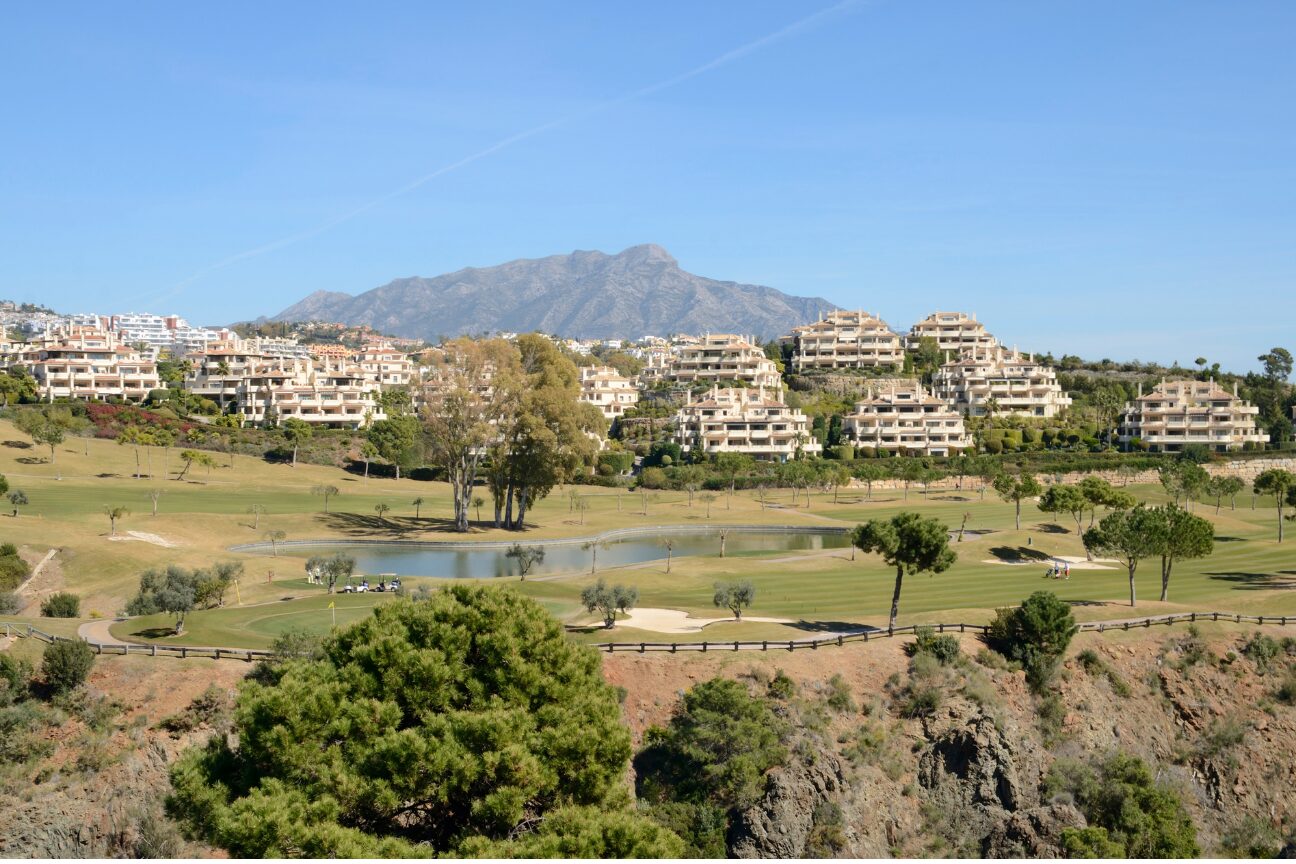
Choosing where on this coast — Estepona, Sotogrande, eastern Marbella, the hill villages of Mijas, the privacy of Benahavís — is the conversation that matters most. Below is how I'd think about it.

Retiring here only works if you build a life, not a postcard. Most people do.
Aerial view of the Costa del Sol coastline near Marbella

Where retirees settle

Five areas — and the daily rhythm each one gives you

Where you settle matters more for retirees than for any other profile, because daily life happens within a fifteen-minute radius of your front door. Below are the five areas I send retirees to most often, chosen for walkability, services nearby, community density and the quality of that fifteen-minute radius.

Estepona town

Estepona town

The walkable Spanish town with strong expat infrastructure.

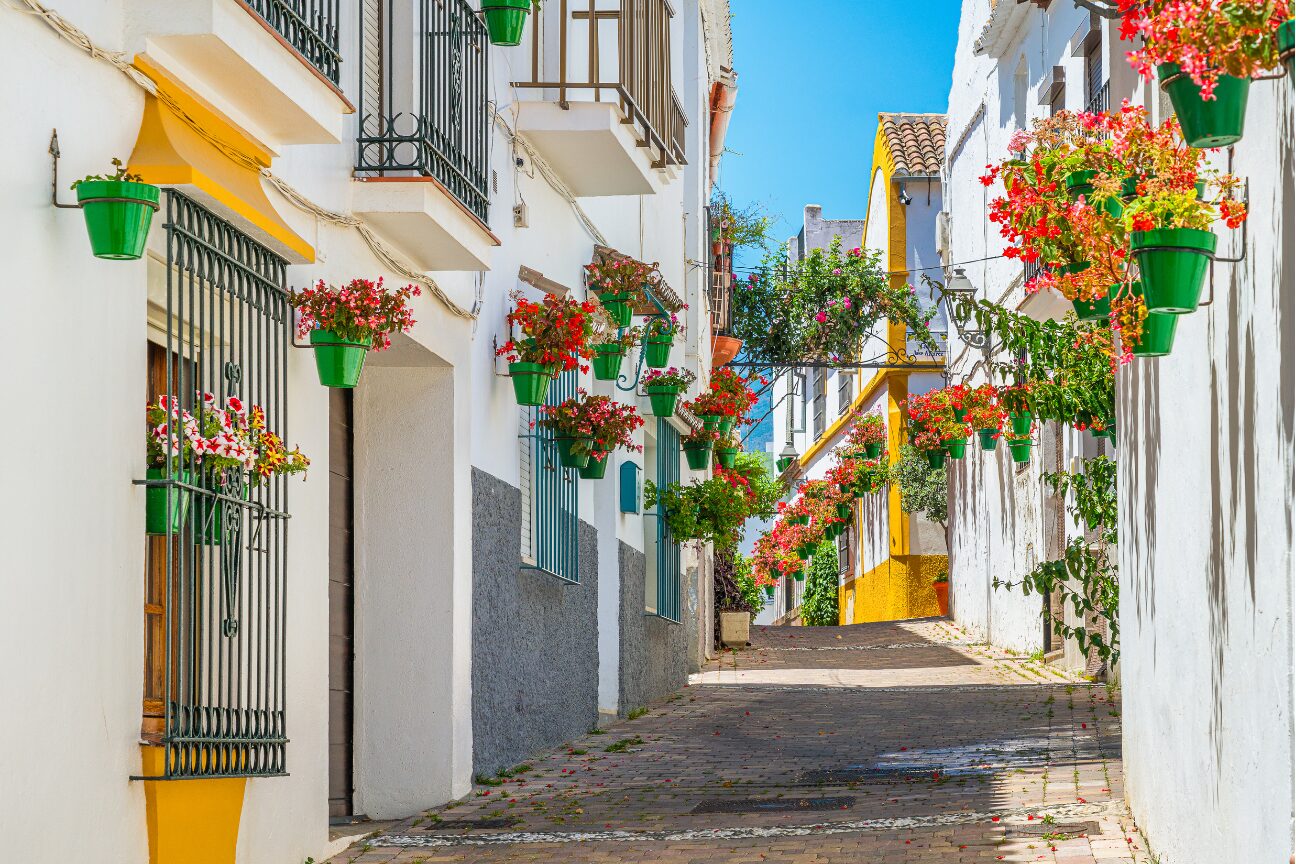
Estepona is my most common recommendation for retirees who want to be in town — and most retirees, I find, want to be in town once they're past the initial pull of a villa with a view. The town has been beautifully renovated, the seafront promenade runs for kilometres, the markets are weekly and properly Spanish, and the international population is established without being overwhelming.

Day-to-day life is bookable on foot. Bakery, doctor, café, friends, gym, restaurant — all within a ten-minute radius for most apartments in the centre.

  • Walkable town centre
  • Beautifully restored old quarter
  • Strong international community
  • Lower cost than Marbella
Sotogrande

Sotogrande

Polished, private, with the strongest international community on the coast.

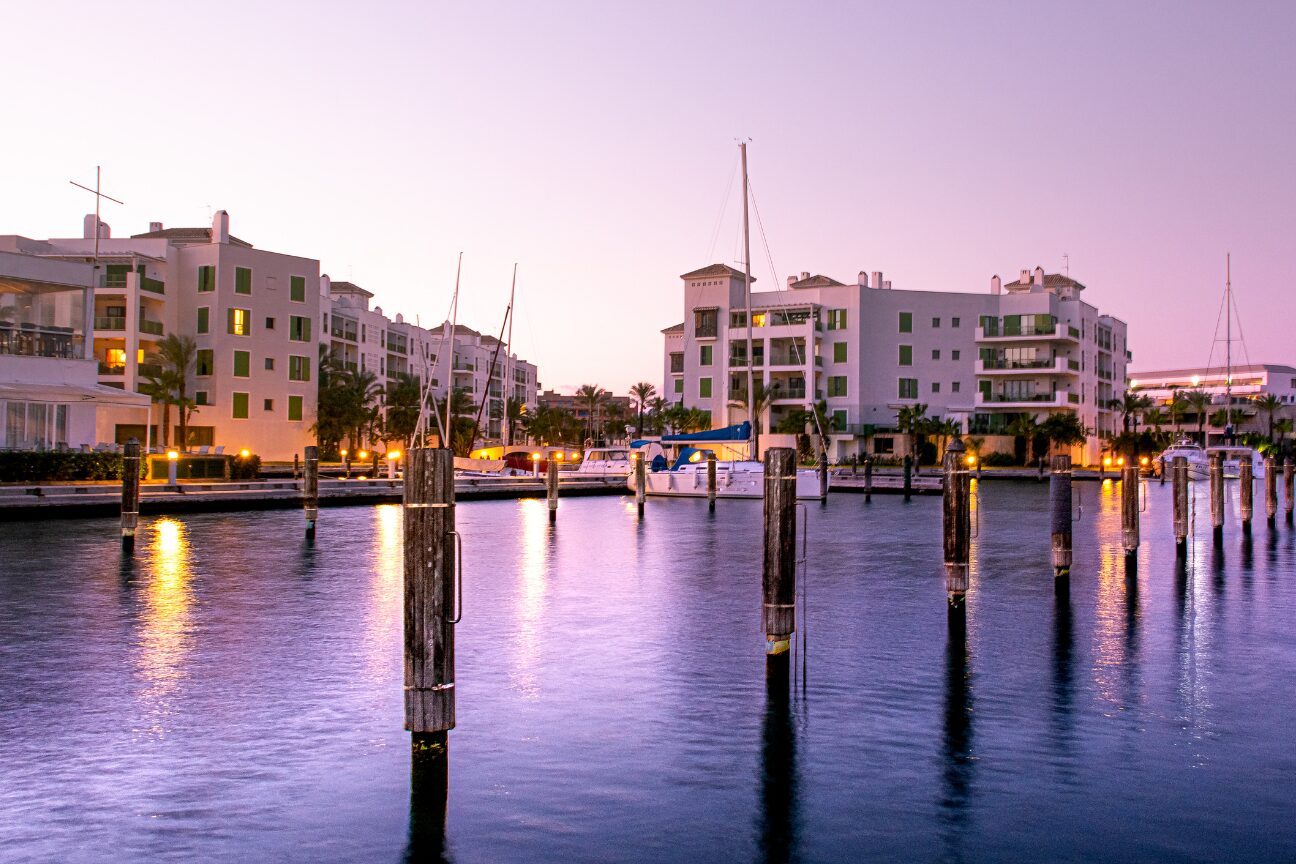
Sotogrande sits in Cádiz province, 45 minutes west of Marbella, and has the most established international community I work with. Originally developed in the 1960s as a private resort, it has become a real year-round neighbourhood with strong schools, world-class golf and polo, and a calmer, more residential pace than central Marbella.

I recommend Sotogrande to retirees who want the international fabric without the busy Marbella centre — and who don't mind the longer drive when they need the airport or Marbella's wider amenities.

  • Strongest international community on the coast
  • World-class golf and polo
  • Quieter, residential pace
  • Established families spanning generations
Mijas Pueblo & Mijas Costa

Mijas Pueblo & Mijas Costa

Andalusian village charm in the hills, with the coast a short drive away.

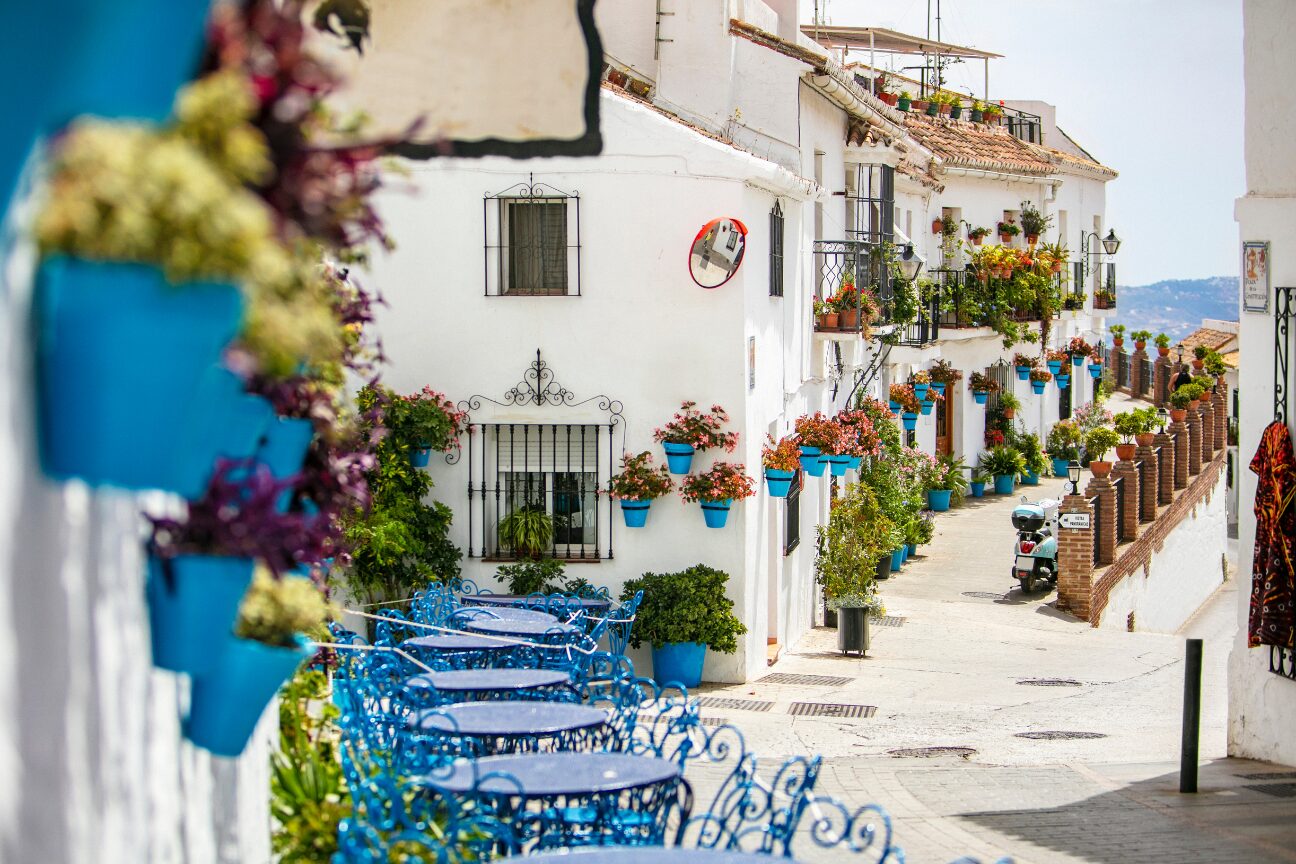
Mijas comes in two halves. Mijas Pueblo (the village) sits in the hills with views over the Mediterranean, an authentic Andalusian feel, and a slower, quieter pace. Mijas Costa (the coastal stretch) has the beaches, the supermarkets, the practical infrastructure.

Retirees who fall in love with the village half almost always end up with a property in Mijas Pueblo and a routine that brings them to the coast a few times a week. The combination is one of the most beautiful daily rhythms available on this coast.

  • Village-on-the-hill charm
  • Coastal infrastructure nearby
  • Genuine Spanish character
  • Strong British and Scandinavian community
Elviria / East Marbella

Elviria / East Marbella

Calmer than central Marbella, with the airport close and good services.

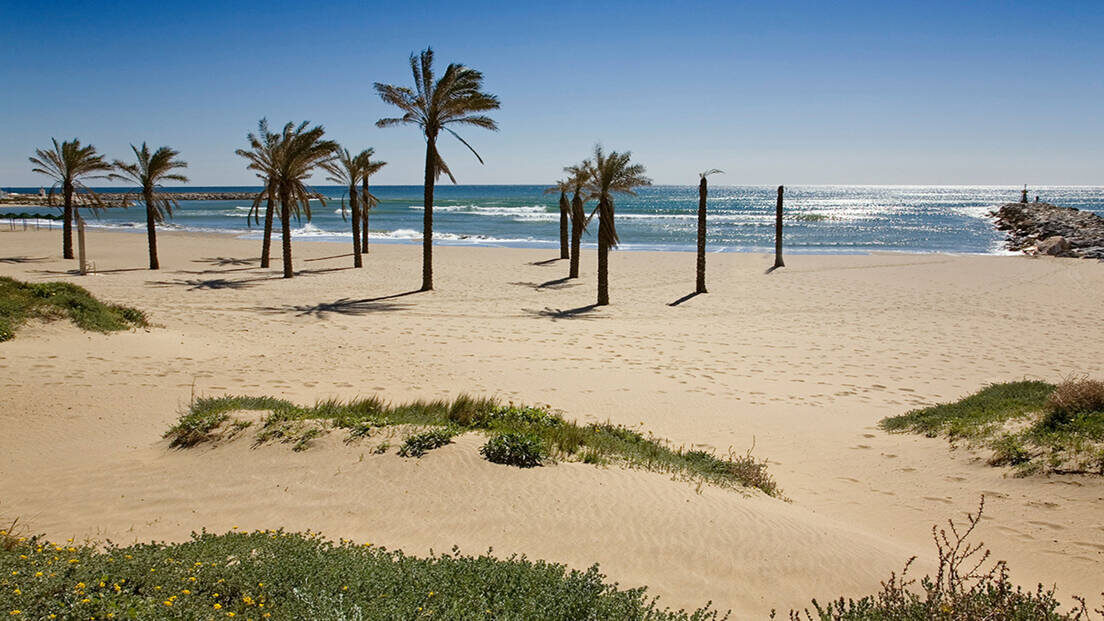
Elviria and the broader east Marbella stretch (Las Chapas, Cabopino) appeal to retirees who want Marbella access — restaurants, hospitals, social calendar — without the noise of the centre. The pine forests of Cabopino, the calmer beaches, and the 20-minute drive to Málaga airport make a real difference.

I send retirees here who have family visiting regularly, or who want a tighter integration with central Marbella amenities than Estepona or Sotogrande offer.

  • Closest to Málaga airport (20 min)
  • Calmer than central Marbella
  • Pine forests and quieter beaches
  • Easy access to Marbella amenities
Benahavís

Benahavís

Hillside calm and village character — for retirees who want privacy.

Benahavís — the mountain village above San Pedro and Estepona — is one of the most beautiful spots in Andalucía and increasingly a serious retirement option. The village proper has cobbled streets, excellent restaurants, and a tight community. The urbanisations on the slopes (Los Flamingos, La Quinta, El Madroñal) offer larger plots, more privacy, and golf on the doorstep.

Retirees here tend to be those who want more privacy and more nature than central Marbella offers, without committing to the longer drive of Sotogrande.

  • Mountain village character
  • Golf urbanisations nearby
  • Strong privacy and quiet
  • 15-minute drive to the coast
The retirement that works here is the one that fills the calendar without filling the day. A long walk, a long lunch, a long conversation, and the discipline to leave the afternoon open.
— Marta
A Marbella terrace at golden hour, overlooking the sea

Daily life

What retirement actually feels like here

Retirement on this coast has a particular shape that takes about a year to settle into. The light, the social rhythm, and the climate all conspire to slow the day down — and then the day teaches you what to fill it with. Below is the texture, the way it actually feels.

Children playing outdoors in a Costa del Sol park

01

Slow mornings

Coffee on the terrace becomes a ritual, not an indulgence. The light comes in at an angle that makes the day feel like it begins on its own terms.

02

Walking, daily

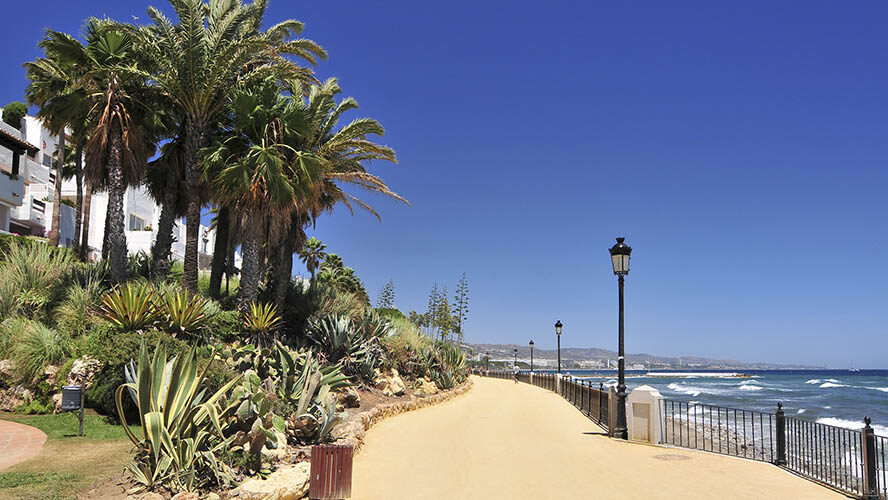
The seafront promenades — Estepona to San Pedro to Marbella — are where retirees actually live. Two miles a day, almost without trying.

03

Lunch as the main event

Long lunches with friends, weekly. Spanish culture makes this normal, not aspirational. It changes the entire week.

04

Padel, golf or tennis

One regular sport — usually two morning sessions a week — is the simplest way to build the friendships that make retirement here actually work.

05

Travel close to home

Granada, Sevilla, Ronda, the Sierra de las Nieves. The geography rewards the day-trip and the long-weekend mindset.

06

Family visits

The airport, the climate, and the spare bedroom mean grandchildren visit more often. That's the part most retirees underestimate.

Healthcare, taxes, paperwork

The practical side — and most of it is good news

What follows is the part I get asked about most often. The healthcare, tax and visa questions matter more for retirees than for any other profile — and the answers are mostly good news.

Healthcare — public vs private

Spain's public healthcare system is excellent and free at point of use. Once you're resident and contributing socially, or once you've reached state pension age in your EU country of origin (via form S1 from your home country), you qualify.

Most retirees combine public coverage with private insurance for convenience: Sanitas, Adeslas and DKV are the major Spanish insurers; BUPA is well-known internationally and works for some retirees. Premiums for the over-65s start at €120–€200/month and rise with age and pre-existing conditions. Worth pricing this in early — premium rises after 70 can be meaningful.

Hospitals: Hospital Costa del Sol (public, Marbella) and HC Marbella, Quirónsalud and Vithas Xanit (private) form the core network, with English-speaking specialists across all of them.

Visa options for non-EU retirees

Non-EU retirees most commonly arrive on the Non-Lucrative Visa (NLV) — designed for retirees and others with passive income. It requires proof of regular passive income (currently around €30,000/year for the main applicant, plus €7,500 per dependant) and private health insurance with no copayments.

The NLV is the right choice if you're not working remotely. If you are, the Digital Nomad Visa is more tax-favourable (see the nomads guide). EU citizens don't need a visa — just an EU registration certificate within three months of arrival.

Fiscal residency and your pension

Spend more than 183 days in Spain in a calendar year and you become a Spanish tax resident, taxed on your worldwide income. For retirees, this matters because Spain taxes pension income — including state and private pensions from your home country — through the residency rules.

The Spain–UK and Spain–US tax treaties (and the parallel treaties with most EU countries) prevent double taxation, but the practical handling matters. A Spanish tax adviser should review your pension structure before you become resident. The answer is usually 'manageable', sometimes 'genuinely tax-advantageous', and occasionally 'plan around this carefully.'

Wealth and inheritance tax in Andalucía

Andalucía has effectively abolished regional wealth tax — a significant advantage over Madrid, Cataluña or Valencia for retirees with meaningful savings. The national solidarity tax applies only at the highest brackets (broadly, net worth above €3M).

Inheritance tax in Andalucía has been effectively abolished for spouses, children and grandchildren — a major factor for retirees thinking about Spain as their final home.

Banking

Sabadell, Santander, CaixaBank and BBVA all open non-resident accounts in a single appointment with NIE, passport and proof of address. Once resident, your account converts to resident status.

For higher-net-worth retirees, the private banking arms of Bankinter, Santander Private Banking and BBVA Private have English-speaking teams and understand the patterns of cross-border retirement.

Driving licence exchange

EU and EEA licences simply register once you become resident. UK, US, Canadian, Australian and most non-EU licences need to be exchanged within six months of residency, and the rules vary by country of origin.

Do this within the six-month window. After that, you may be required to retake the Spanish driving test in Spanish — a non-trivial step. I'll flag the current rules for your country during our discovery conversation.

Building community

Three reliable entry points for retirees on the coast: clubs (golf, padel, bridge, sailing — pick one and commit), associations (the international clubs in each town are dense with retirees and remarkably warm to newcomers), and Spanish lessons. Even a few hours a week of Spanish opens conversations the expat-only routes don't reach.

Six to twelve months is the honest timeline before a new life feels settled. The retirees who give it that time are almost universally glad they came.

Wills and inheritance planning

Once you own property or are tax-resident in Spain, you should have a Spanish will (testamento). This sits alongside, not in place of, your home-country will. EU regulations let you elect for your home-country inheritance law to apply — a meaningful planning decision that should be documented properly in your Spanish will.

A Spanish lawyer with cross-border experience handles this. Cost: typically €300–€600 for a straightforward will.

Two paths from here

Most clients arrive on one of two paths.

Some are clear from day one that they want to buy. Some want to rent first — a year on the coast to test the climate, the neighbourhood, the daily rhythm — before committing capital. Both are valid; I've helped clients down both paths many times.

Below is what each path actually involves. Either way, the discovery form is where we start.

If you want to rent first

Renting in Spain — how it actually works

Renting in Spain follows its own rules, and the rental market here works differently from the UK or US in a few important ways. What follows is the practical map.

The Spanish rental market — overview

Long-term rentals (alquiler de larga duración) in Spain are contracts for 12 months minimum, automatically renewable for up to five years at the tenant's option. The landlord can only refuse renewal in specific cases (personal use, sale to certain buyers). This gives tenants meaningful security.

Short-term rentals (alquiler de temporada) are 1–11 months, used for seasonal stays or test moves. They're typically priced higher per month, taxed differently for landlords, and don't carry the same renewal rights. For a rental-first transition, the long-term contract is usually the right shape.

NIE and documentation

You need a NIE to sign a long-term rental contract in Spain. Apply through the Spanish consulate before arrival (slower, cleaner) or at a local national police station in Spain (faster, requires appointment). For arrivals on the Digital Nomad Visa or NLV, the visa application includes the NIE.

Landlords typically also ask for: proof of income (recent pay-slips or tax returns), passport, and sometimes a reference from a previous landlord. International renters with strong documentation are often preferred.

Guarantees and deposits

Standard deposit is one month's rent plus an additional one-month guarantee (fianza adicional) — so two months upfront, plus the first month's rent. Total upfront commitment on a €2,000/month rental: €6,000.

Higher-end rentals sometimes require larger guarantees — particularly furnished villa rentals or rentals from professional landlords. Worth asking early; the answer varies more than you'd expect.

Furnished vs unfurnished

Almost all rentals on the Costa del Sol come furnished — a meaningful difference from many northern European markets. The furniture is included; the tenant brings personal effects, kitchenware they care about, and not much else.

Unfurnished rentals exist but are rarer, often longer-term, and skewed towards larger family villas. Worth asking specifically if you want unfurnished — the standard listings won't filter for it.

Bills and community fees

Standard rental contracts include the gastos (community fees, basura, building maintenance) but not the utilities — water, electricity, gas and internet are tenant-paid. Budget around €150–€300/month for utilities on a 2-bed apartment; more for a villa with a pool.

Internet is the tenant's responsibility. The landlord will usually let you take over an existing fibre contract or install your own; most modern apartments are already fibre-ready.

Reading the contract

Spanish rental contracts (contrato de arrendamiento) are well-regulated and broadly similar across landlords. Key clauses to check: contract length and renewal terms, deposit and guarantee amounts, rent indexation (usually IPC, the Spanish CPI), pet policy, and notice period (typically 30 days from the tenant's side after six months in the property).

If anything looks unusual or restrictive, ask. International tenants sometimes get presented with non-standard contracts that include clauses Spanish tenants would push back on. Worth having a Spanish lawyer review longer or higher-value contracts.

Pet policy

Pet policies vary hugely. Many landlords welcome pets; some flat-out refuse; some accept with an additional guarantee. State your pets up-front rather than after signing — the rental market on this coast is broad enough that you'll find a landlord who's comfortable, but you'll waste viewings if pets aren't disclosed.

The transition from renting to buying

Most clients who rent for a year end up buying within months ten to fifteen of the rental. The shape of the conversation is different by then: you know the areas, you know the climate, you know what you actually want from the property, and the search becomes quicker and more decisive.

Practically, the buying process is the same as outlined in the investors guide. Most clients give notice on the rental six to eight weeks before completion; landlords are typically flexible if you've been a good tenant. Don't let the rental contract drift to its automatic renewal date without a plan — that's where avoidable costs arise.

If you want to buy

Buying property in Spain — the actual process

Buying property in Spain as a foreigner is well-trodden ground. The process is clear, but it's not casual — there are six moments where good advice changes the outcome significantly. Here's how it actually runs. (For the full fiscal picture and budget-tier framing, see the investors guide.)

NIE — Foreigner Identification Number

You can't sign a purchase in Spain without a NIE — the Spanish foreigner identification number. It's the same number you'd need for a long-term rental or to open a bank account, and it's the first piece of paperwork I help my clients line up.

Two routes: through the Spanish consulate in your country of residence (slower but cleaner) or in person at a national police station in Spain (faster but requires an appointment). For a buyer arriving on a property trip, the in-person route usually fits the timeline better.

Choosing a Spanish lawyer

A Spanish property lawyer — abogado — is the most important single hire of the entire process. Their job is to verify title, check for charges and debts on the property, confirm planning compliance, and structure the purchase to your tax circumstances.

I work with a small group of bilingual lawyers I trust completely and have used through dozens of transactions. They're independent — they represent you, not the agent — and their fee is typically 1% of purchase price (plus VAT).

Due diligence

Once you've made an offer that's accepted, your lawyer's due diligence begins. They'll pull the title deed, check the planning register, confirm that any extensions or pools have been declared properly, verify that community fees are current, and confirm that no debts attach to the property.

This is the stage where deals occasionally fall apart — usually because something undeclared turns up in the planning register, or because the seller's situation is more complicated than they disclosed. That's exactly what your lawyer is paid to find.

Reservation contract

Once both sides agree to proceed, you sign a reservation contract and pay a small deposit (€6,000–€10,000 typically) to take the property off the market while due diligence completes. This step is sometimes skipped on private-treaty resales and almost always included on new builds.

Arras (deposit) contract

Once due diligence clears, you and the seller sign the contrato de arras — the deposit contract — and you pay 10% of the purchase price. From this point, if you walk away you forfeit the 10%; if the seller walks, they owe you 20%.

Completion typically follows 6–12 weeks after the arras signing, giving you time to arrange remaining funds, mortgage drawdown if applicable, and the practical move-in.

Completion at the notary

Completion happens at the Spanish notary — escritura pública. You, the seller, both lawyers, and (if relevant) the bank attend. The deed is signed, the remaining 90% transfers, and the keys hand over. The whole appointment usually takes about an hour.

The property is then registered in the local property registry over the following 4–8 weeks. That's a formality your lawyer handles.

Questions retirees ask me

What retirees actually want answered first

Most of what follows comes from real first conversations. If your question isn't here, ask it in the discovery form — I'll answer it personally.

Why retire on the Costa del Sol?

The Costa del Sol offers retirees a rare combination: 300+ sunny days a year, excellent public and private healthcare with English-speaking specialists, favourable Andalucían wealth and inheritance tax for direct family, a 25-minute drive to Málaga International Airport for family visits, and an established international retiree community spanning fifty years. The infrastructure for international retirees is genuinely mature — doctors, lawyers and banks all have decades of expat experience.

What's the best area in Costa del Sol for retirees?

The five most-recommended areas for international retirees are Estepona town (walkable, well-restored, strong expat infrastructure), Sotogrande (polished, private, strongest international community), Mijas (village charm with coastal access), Elviria/East Marbella (calm, close to airport, good services), and Benahavís (hillside privacy with golf). Estepona is the most common recommendation for retirees who want to be in town day-to-day.

How does healthcare work for retirees in Spain?

Spain's public healthcare system is excellent and free at point of use once you're a resident. EU citizens at state pension age can access it via form S1 from their home country. Most international retirees combine public coverage with private insurance (Sanitas, Adeslas, DKV or BUPA) for convenience, costing €120–€200/month for the over-65s and rising with age. The main hospitals are Hospital Costa del Sol (public), HC Marbella, Quirónsalud and Vithas Xanit (private), with English-speaking specialists at all of them.

What visa do I need to retire in Spain as a non-EU citizen?

Non-EU retirees most commonly apply for the Non-Lucrative Visa (NLV), designed for retirees and others with passive income. Requirements include proof of regular passive income (around €30,000/year for the main applicant, plus €7,500 per dependant), private health insurance with no copayments, a clean criminal record, and a Spanish address. The visa is renewable, leads to permanent residency after five years, and Spanish citizenship after ten.

Do I pay tax on my pension if I retire to Spain?

Yes, if you become a Spanish tax resident (spending more than 183 days in Spain in a calendar year). Spain taxes your worldwide income, including pensions from your home country. However, tax treaties with the UK, US and most EU countries prevent double taxation, and Andalucía has effectively abolished regional wealth tax and inheritance tax for spouses and children. A Spanish tax adviser should review your pension structure before you become tax-resident — the answer is usually manageable, sometimes advantageous.

Is the Costa del Sol expensive to retire to?

Compared to northern European capitals, no. A couple lives comfortably on €3,500–€5,000 per month covering housing (rental or owned), private healthcare, food, social life and travel. Costs are higher than rural Spain or Portugal but lower than London, Paris or major Scandinavian cities. The largest variable is housing: a long-term two-bedroom rental in Estepona runs €1,200–€1,800/month; in central Marbella €1,800–€3,000; in Sotogrande typically higher and varying by season.

How does inheritance tax work for retirees in Andalucía?

Andalucía has effectively abolished inheritance tax for spouses, children and grandchildren — making it one of the most favourable regions in Spain for retirees planning to pass on assets to direct family. This applies once you're tax-resident or own Spanish property. Cousins, friends and other non-direct heirs face standard inheritance tax rates. A Spanish will (testamento) should sit alongside your home-country will; under EU rules you can elect for your home-country inheritance law to apply.

Can I keep my UK or US bank account if I move to Spain?

Yes. Most retirees keep their home-country accounts and add a Spanish current account for daily life. UK and US banks vary in their tolerance of non-resident customers — some will close accounts when you formally update your address abroad, others won't. Worth checking with your home bank before notifying them of the move. Wise and Revolut bridge most international transfer needs cleanly.

How do I integrate into the community as an international retiree?

Three reliable entry points: clubs (golf, padel, bridge, sailing — pick one and commit), the international associations in each town (dense with retirees, remarkably warm to newcomers), and Spanish lessons. Even a few hours of Spanish a week opens conversations the expat-only routes don't reach. Six to twelve months is the honest timeline before a new life feels settled.

Should I rent first or buy a property when retiring to Marbella?

Most retirees benefit from renting for 6–12 months before buying. A rental in your target area teaches you more about the daily reality than any number of viewings — and it's common to realise after three months that the area you thought you wanted isn't quite right. Buy directly only if your area knowledge is already solid, your timeline is firm, or you've identified a property that won't wait. See the buyer's guide for the purchase process itself.

Start here

Begin with a quiet conversation.

The discovery form gives me enough context to write back personally — likely areas, the visa and healthcare route that fits your situation, and the practical first steps. It's the way every retiree I've worked with started.

Start the discovery form